



Early Childhood Development
Creating safe, nurturing learning spaces that give young children the confidence and foundations they need to thrive, strengthening families and communities.
Select the arrival date which would suit you.
After selecting your preferred arrival date, swipe left across the availability table beneath the camp name to view the next 7 days.
Send us a booking enquiry today with your travel dates and contact information and one of our safari consultants will be in touch within 24 hours.
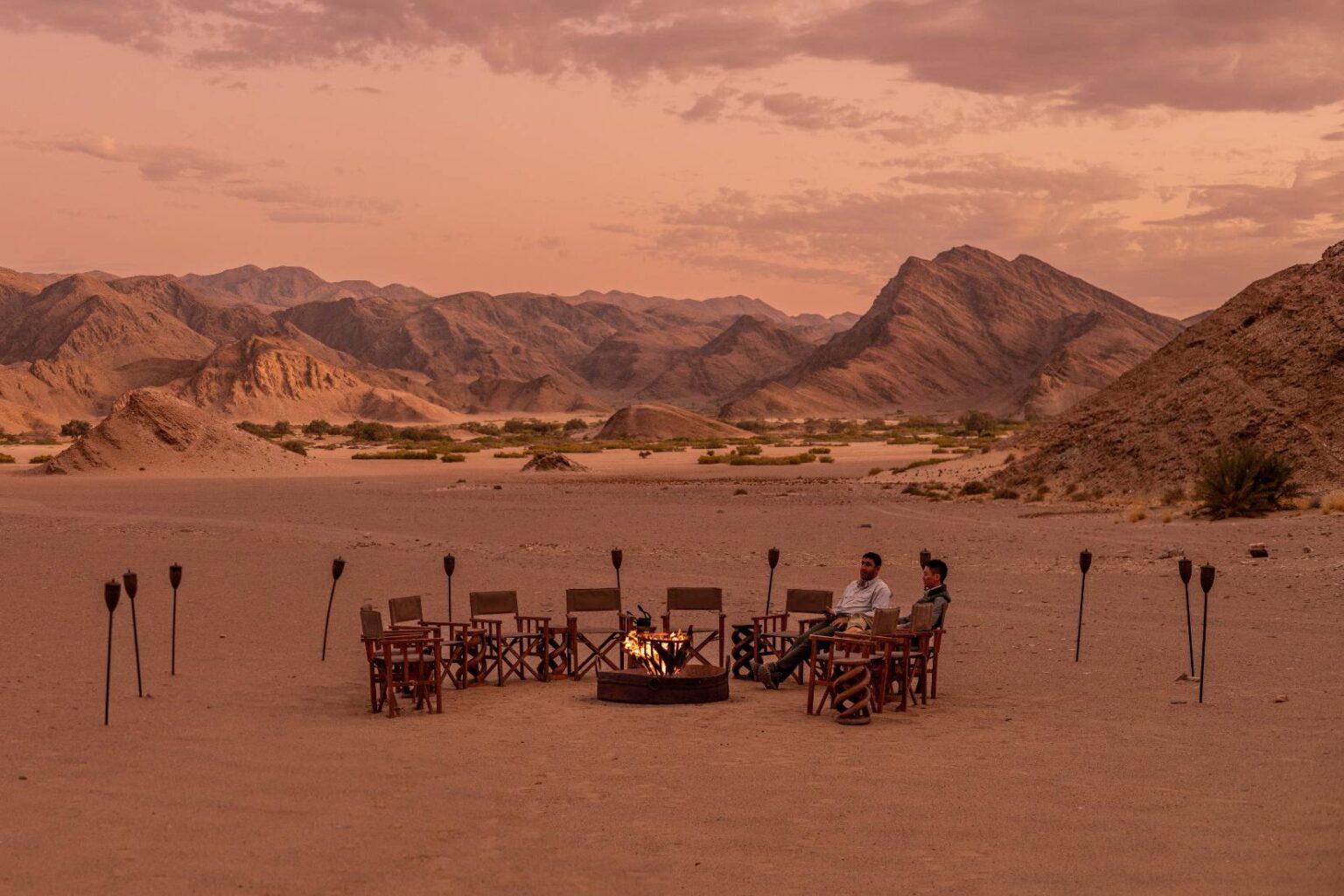
In a country jam-packed with vast, spectacularly beautiful landscapes, Kaokoland may just be the most incredible of them all. Deep in north-western Namibia, the area is a melee of towering mountains, sand dunes, and huge expanses of desert, scattered with unique wildlife and nomadic Himba settlements. It’s also one of Namibia’s most remote and wild environments, and one that not many will get the chance to discover in a lifetime, and the very reason we’ve built it here.
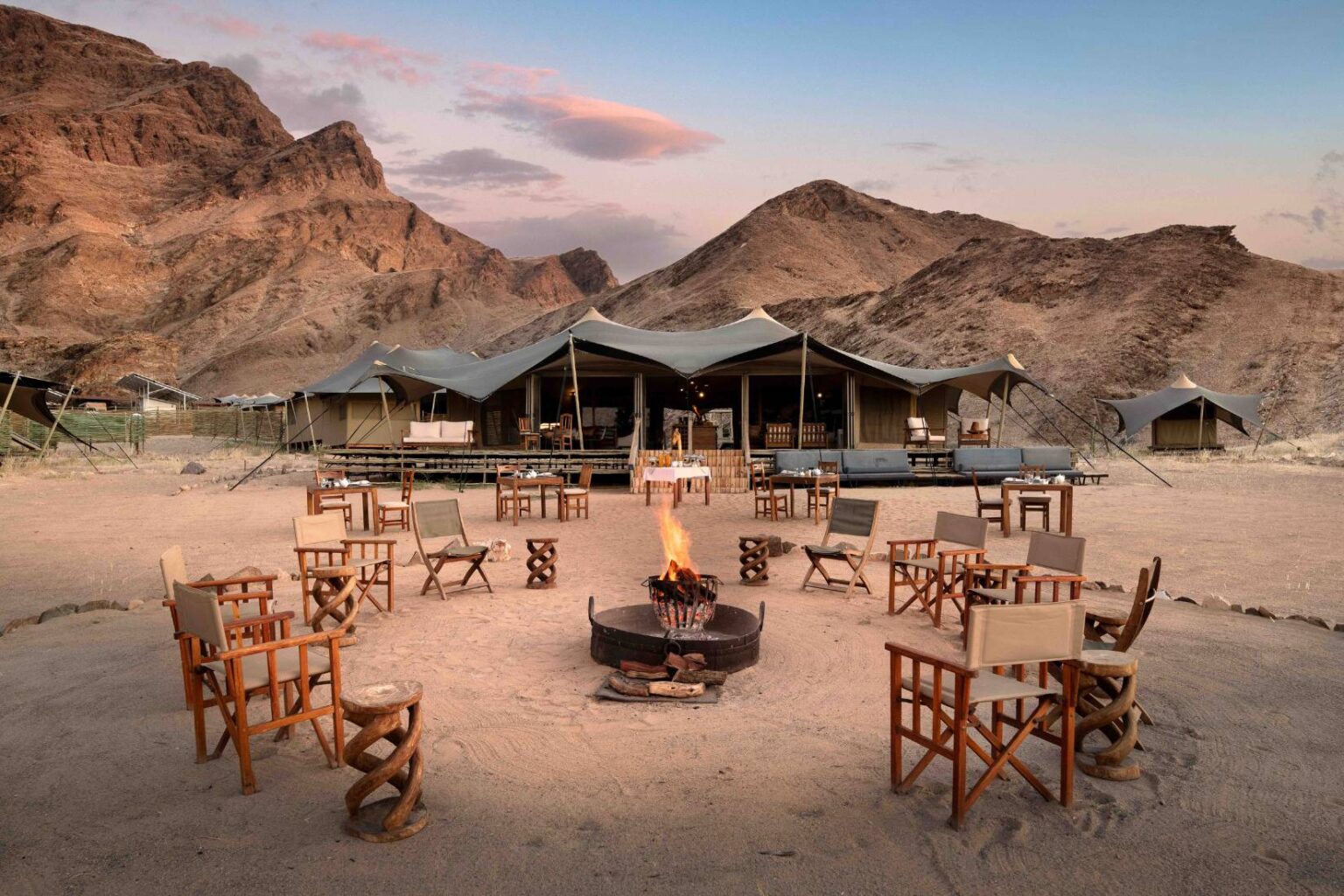
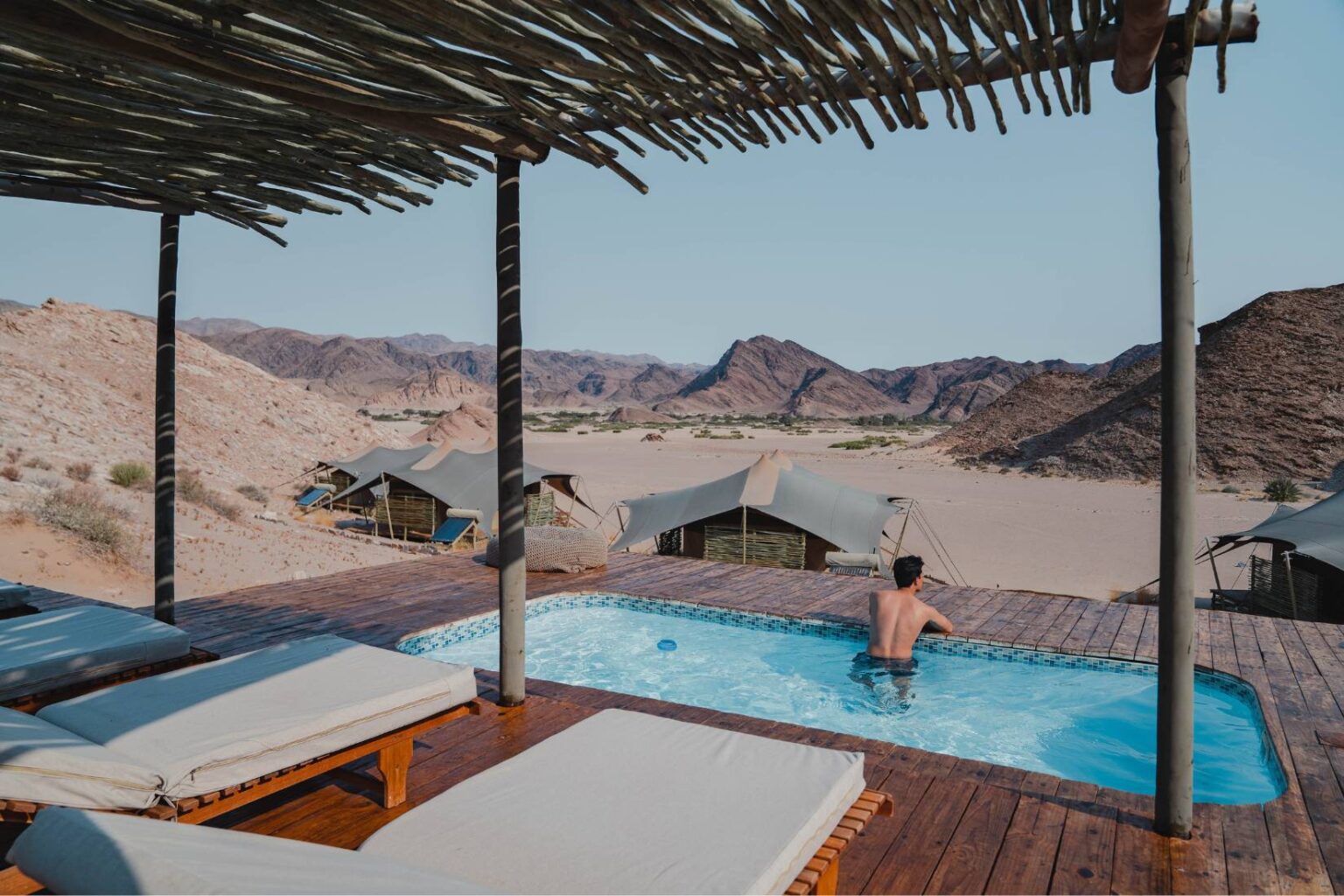
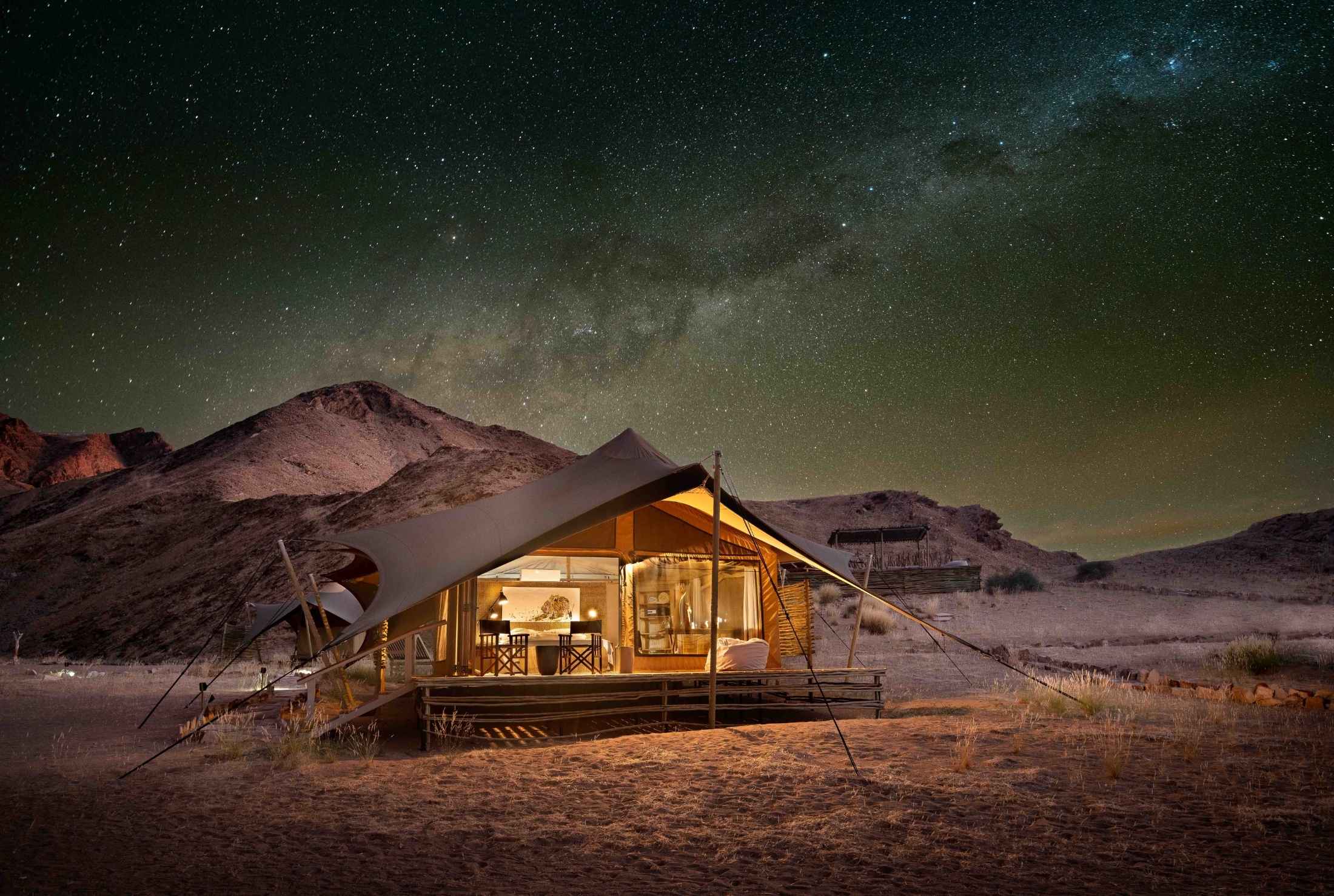
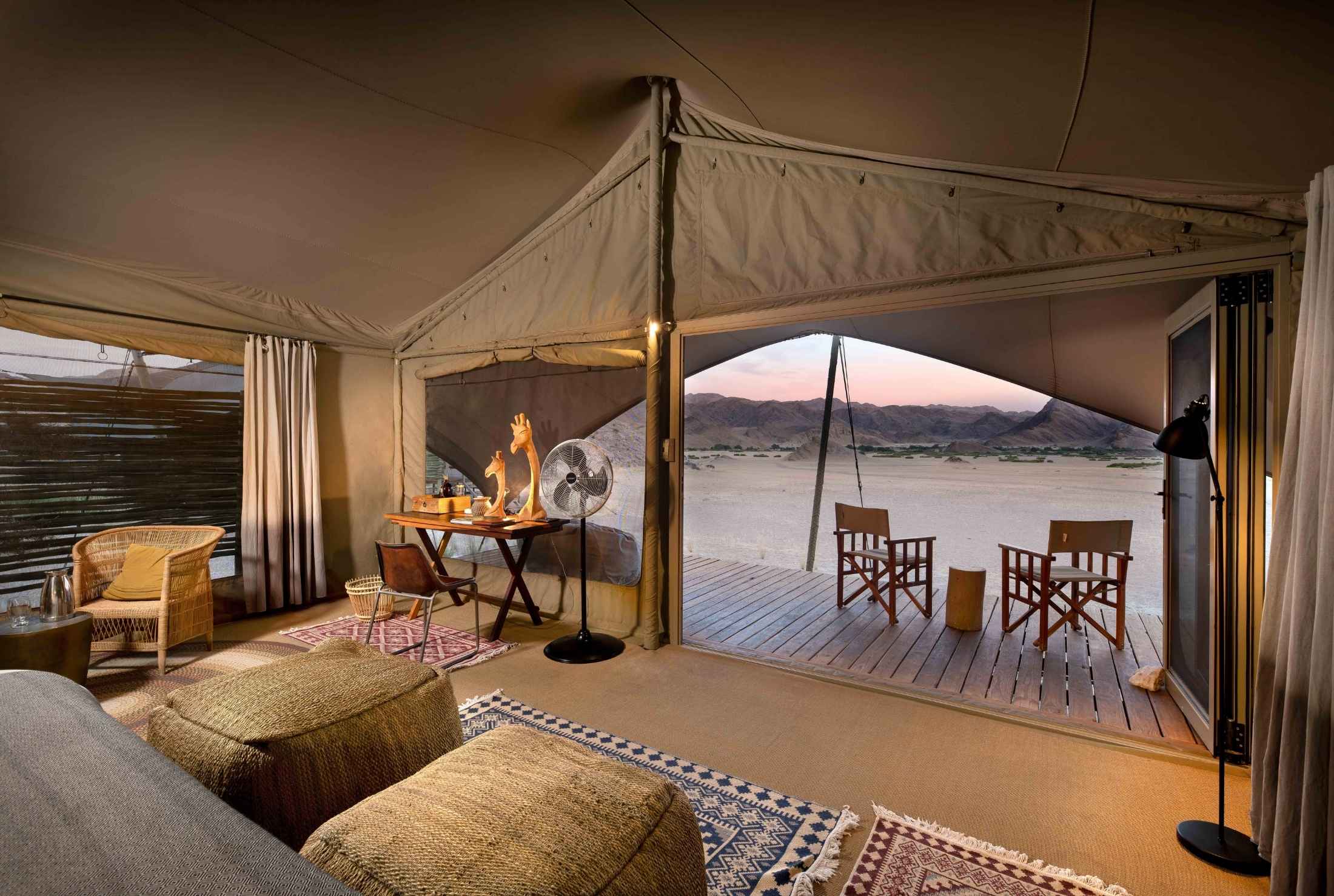
The six rooms rests effortlessly in this wild environment, offering a simple aesthetic that matches the rugged landscape down to a tee. Days are spent tracking endangered rhino, desert-adapted elephant, and of course desert-adapted giraffe, before retiring to your private veranda to marvel at the magnitude of your surroundings (sundowner in hand).
Simply by making a choice to visit Hoanib Valley Camp you are already leaving a positive impact on the conservation of desert dwelling giraffe and supporting a black rhino introduction programme.

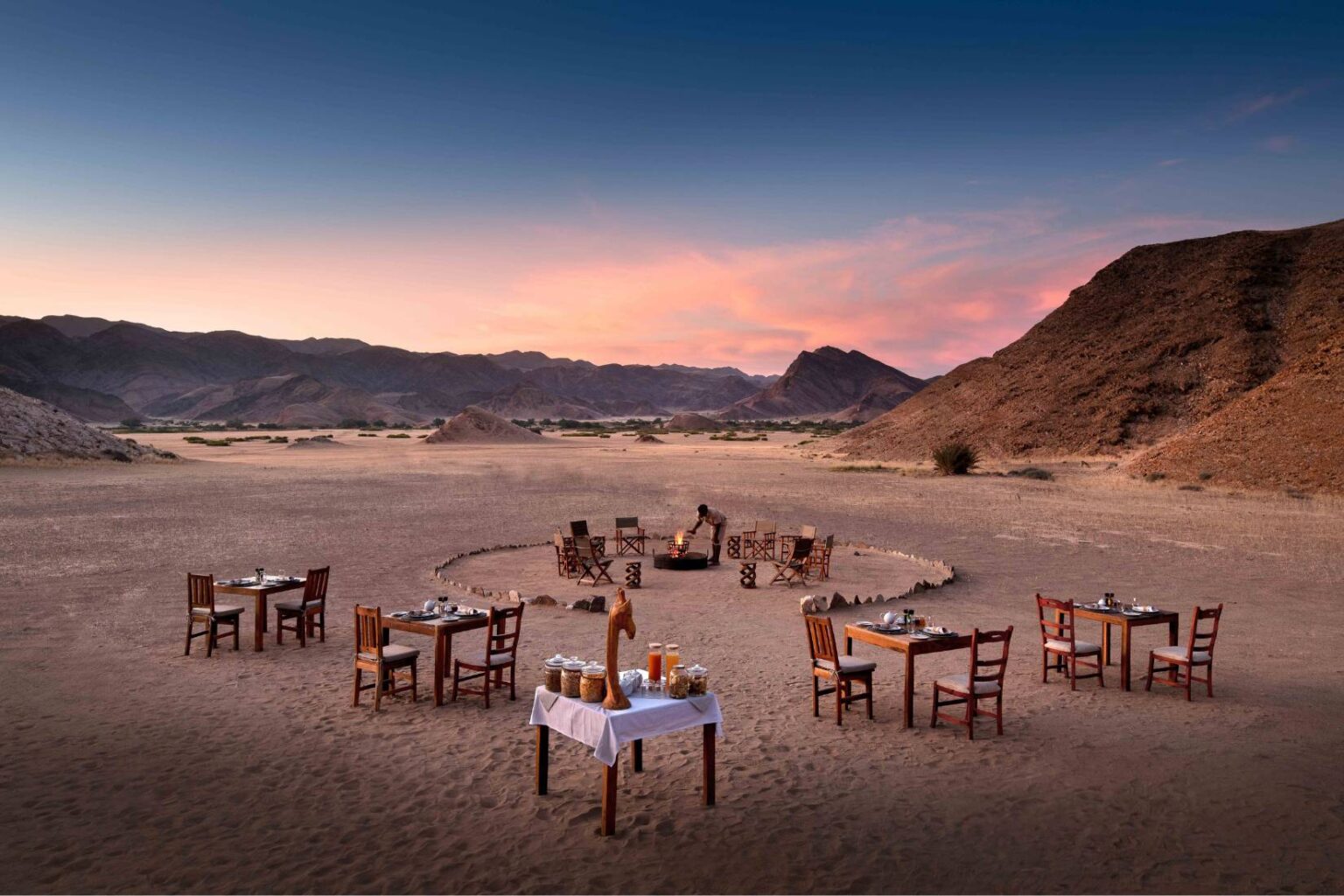
Deep in the north-western corner of Namibia, Kaokoland is one of the most remote, wild and marvellously unique areas of the country. It’s a land characterised by rolling dunes, rocky mountains and desert plains all criss-crossed by ancient, dry riverbeds, the roads of the area. Temporary Himba settlements dot the landscape, and scattered herds of desert-adapted elephant and giraffe are a common sight.
Hoanib Valley Camp itself is located in the Sesfontein Community Conservancy, our joint partners in the area. The camp itself is set back in a hidden valley and surrounded by a range of jagged mountains, just outside the private 500 square kilometre Palmwag Concession. Views are of the ephemeral Hoanib River that teems with resident elephant, giraffe, oryx and springbok. Although parts of the land have been designated ‘concession areas’ tourism is still limited, making a visit to this unspoiled corner even more memorable.
Hoanib Valley Camp is open year-round, but the two seasons (green season and dry season) offer two remarkably different experiences.
The summer months of December to March are the green season. When the rain comes, the rocky landscapes are transformed into a rich, emerald carpet, and, depending on the level of rainfall, the dry riverbeds flow (albeit briefly) with life-giving water. Dramatic sunsets are littered with heavy clouds, and short bursts of rain clear the dust from the air. It’s fresh, vivid, and although temperatures can be high, it’s a lovely time of year to visit.
Then the rain stops, and the land dries slowly into its iconic, desert state. Midwinter (May to July), brings chilly temperatures in the mornings and evenings (that’s where the warm jacket comes in) but as the season progresses the temperatures rise steadily. By October, the land is at its driest and the temperature at its warmest, and as the desert-elephant begin to congregate around the last drops of water in the river valleys, you’ll be rewarded with some truly incredible sights.


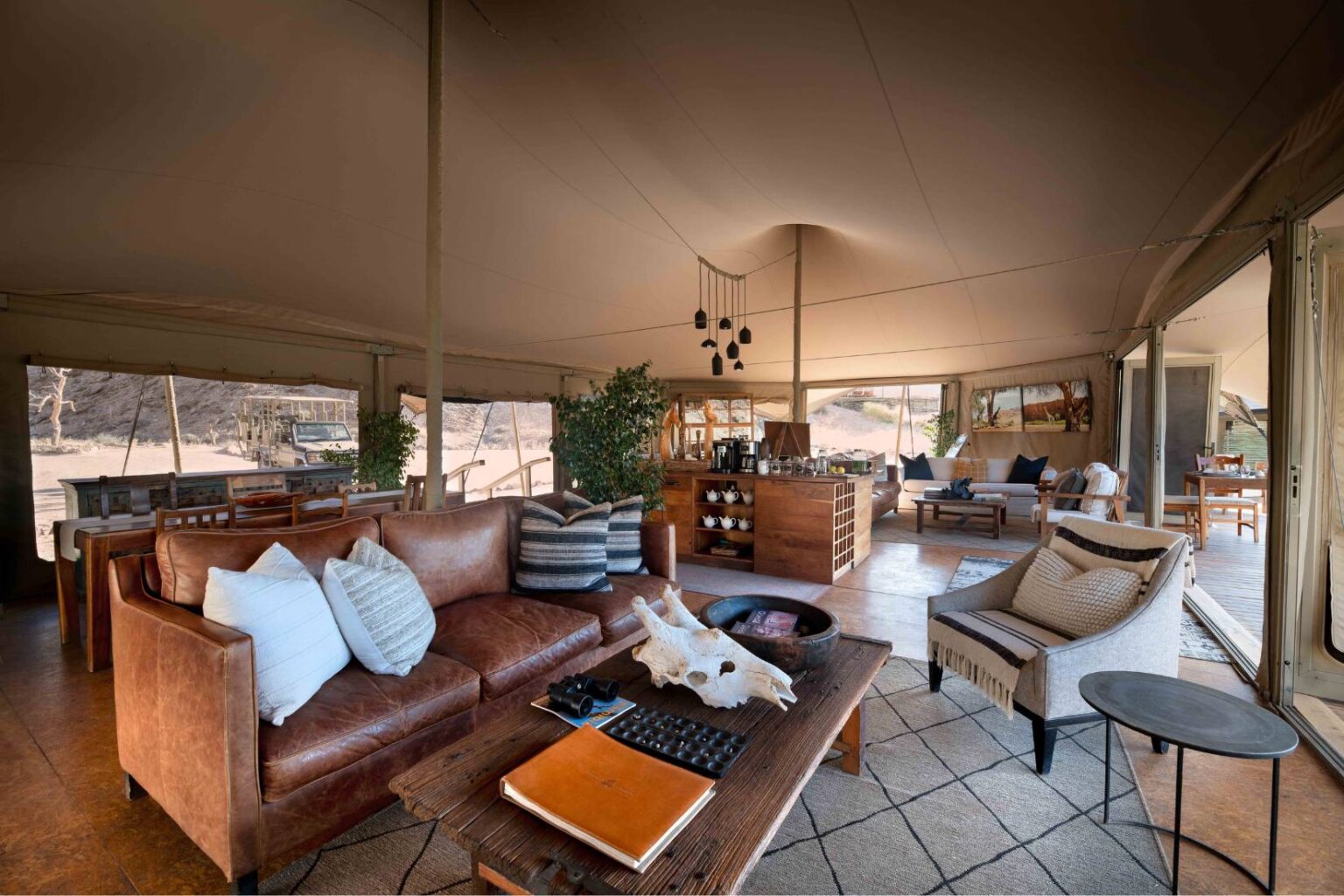
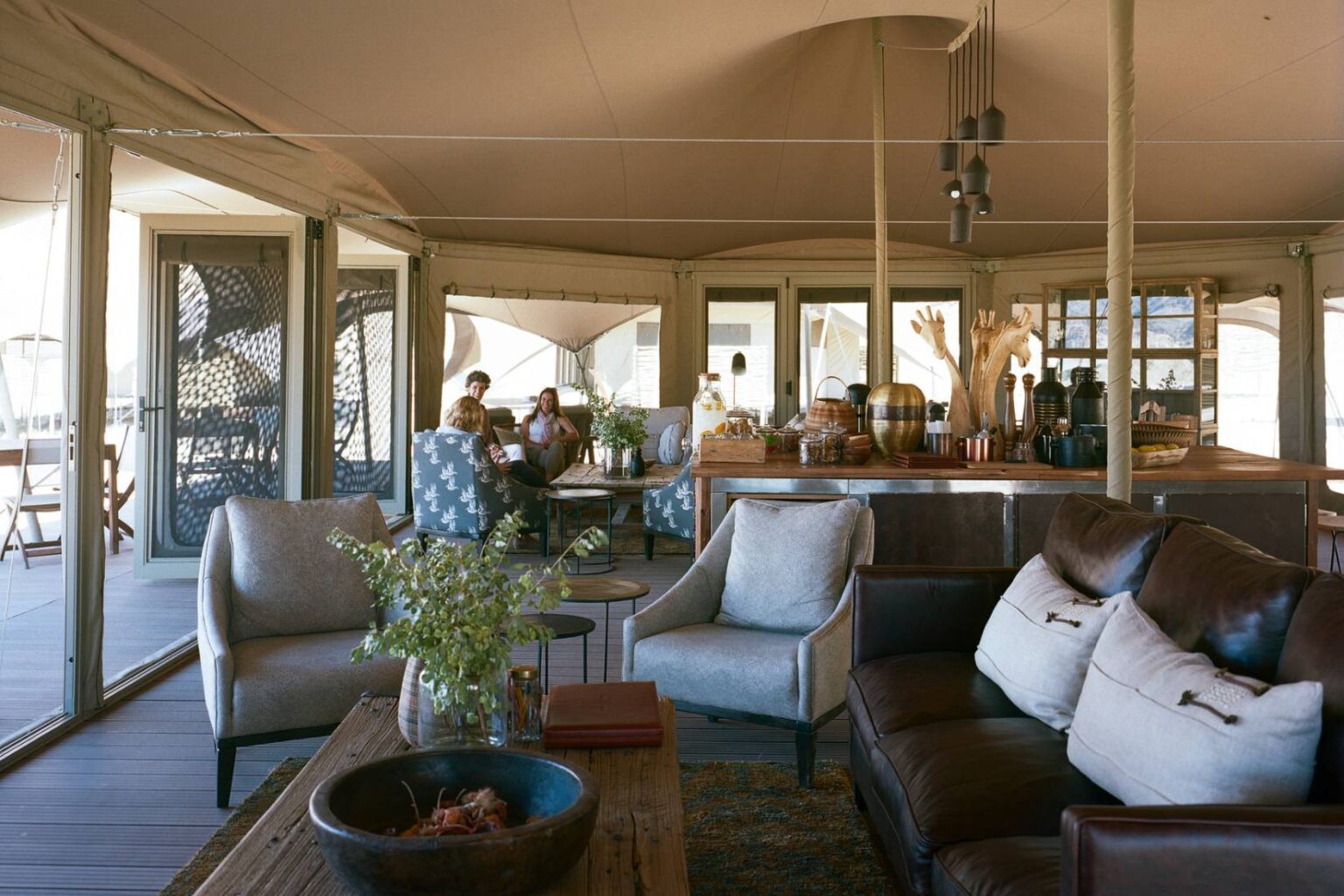
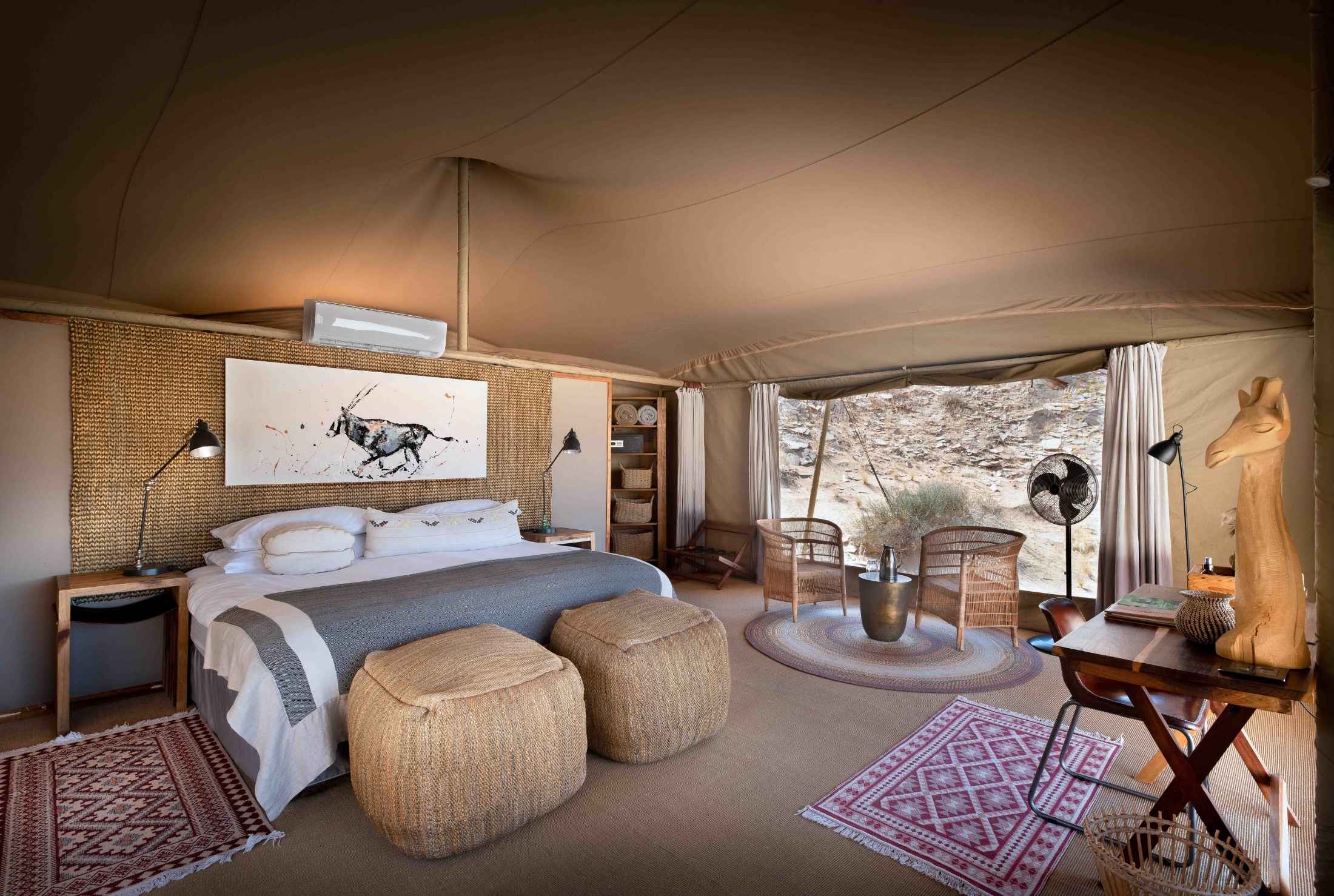
Hoanib Valley’s six guest tents sit in harmony with the rugged environment. The colours, textures and patterns are inspired by the experience of the Hoanib; the rich ochre of the dunes, the geometric patterns of the Himba people and, of course, the giraffe that inspired the project.
True to the ethos of Natural Selection, we’ve sourced materials locally, and you’ll find furniture shaped by the local Rundu carpenters and Himba carvers, and baskets weaved by the people of the Omba Project in Windhoek. The whole camp is a clean and green sort of place, leaving virtually no footprint on this fragile eco-system. It’s entirely solar powered to ensure carbon emissions are kept to a minimum, and the tents sit on decks made of a wood, bamboo and 70% recycled-material composite.
The wildlife of the Hoanib Valley is perfectly at home in the arid environment, and learning about their survival techniques is fascinating. Game drives will reveal desert-adapted elephant, as well as stately desert-adapted giraffe, and, if you’re very lucky, desert lion. Zebra, klipspringer and kudu move freely through the mountains, and you’ll find hardy herds of springbok and oryx, as well as steenbok picking their way across the dust-blown landscapes. The region is home to the largest population of free-ranging black rhino, and a day (or even a morning or an afternoon) tracking the magnificent beasts is an absolute must. Bird watchers, keep your eyes peeled for Monteiro’s hornbills or Ruppell’s korhaans in the valleys, and the imperious Verreaux’s eagle in the mountains.
Get access to a range of experiences that can be enjoyed during your stay
When you visit, you will be directly supporting the following Natural Selection conservation initiatives:
You’ll find Hoanib Valley Camp in the Kaokoveld region of north-west Namibia – an area that has long held an allure for Dr Julian Fennessy, Africa’s foremost giraffe expert and the go-to guy for information on the hardy population of desert-adapted giraffe who live here. Julian and Stephanie Fennesy of the Giraffe Conservation Fund (GCF) are our partners in this property together with the Sesfontein Community who live some way inland of camp.
When we first started to build Hoanib Valley Camp, we employed 20 labourers from Sesfontein to help us and now, 80% of our staff hail from there. We also pay 8% of our turnover as rental to the community, which they in turn use to finance salaries for rhino rangers and game guards.