Namibia is a land we think we know.
A country of towering dunes, ancient deserts and horizons that seem to stretch on forever. There are other, hidden facets of this remarkable country though. Travel to its far northeastern reaches, and the landscape undergoes an extraordinary transformation. Because out here, the desert gives way to water.
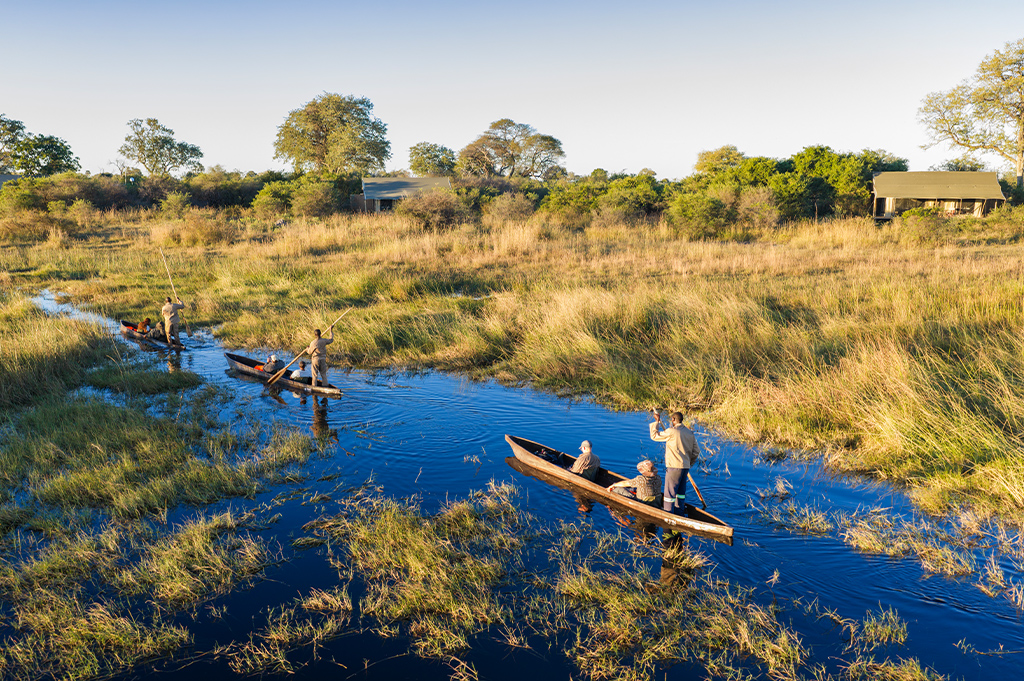
Rivers spill across vast floodplains. Channels weave between islands. Reeds rise from the shallows and, with the changing seasons, water redraws the land. Hidden within Nkasa Rupara National Park, the Linyanti Wetlands are wild, waterlogged and largely unknown – this is Namibia’s Delta.
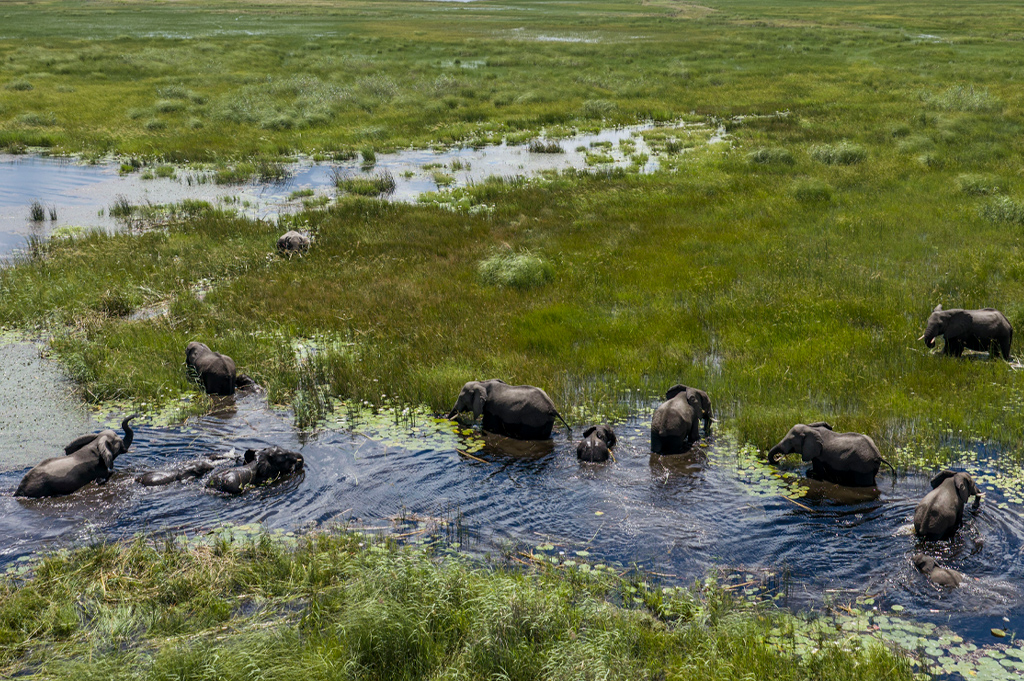
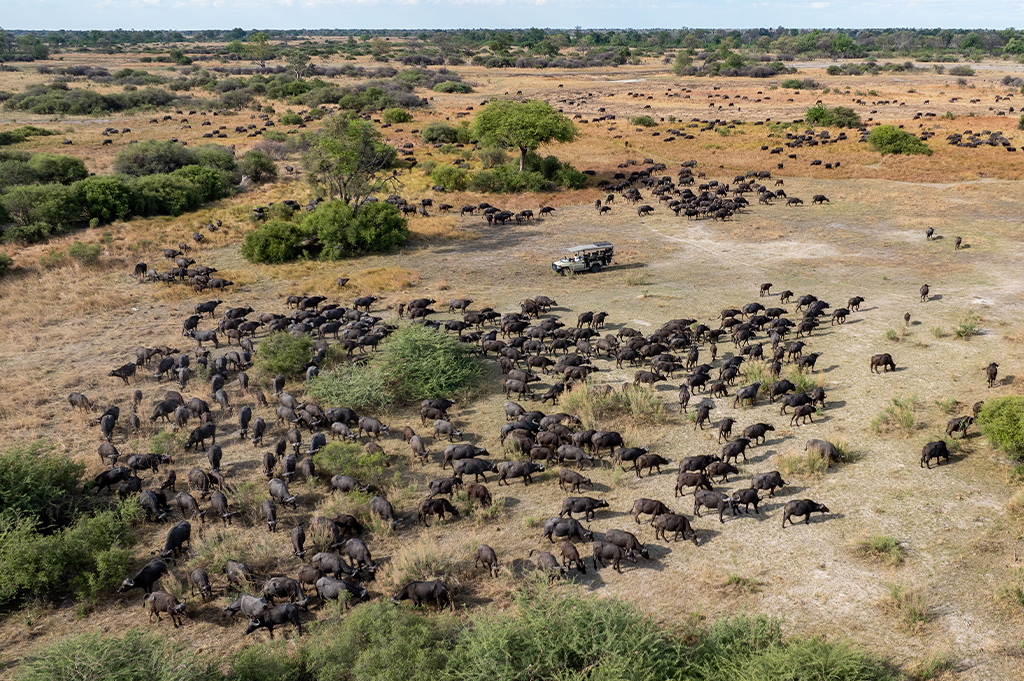
As is the case in the neighbouring Okavango Delta in Botswana, this landscape is shaped by seasonal floodwaters. These waters return each year, filling the wetlands and luring wildlife. As if on cue, elephants move through ancient migration corridors, great breeding herds of buffalo spread across the plains, and predators such as lion and leopard are never far behind. Yet, despite all of this, it remains a wilderness few people know exists.
In this Delta of the desert, rivers meet and a new story begins.
Not far from the thunder of Victoria Falls, where the Linyanti and Kwando rivers shape a vast wetland wilderness, lies Nkasa Rupara National Park. It forms part of the Kavango-Zambezi Transfrontier Conservation Area (KAZA) one of the largest transboundary conservation landscapes on Earth.
The borders drawn by humans mean very little to life here. The wildlife moves across this landscape as they always have, following historic pathways laid down long before countries appeared on maps. These dynamic conditions support incredible levels of biodiversity, making Nkasa Rupara both a sanctuary for endangered species, and a vital link in one of Africa’s greatest wildlife corridors. Its conservation significance lies in both its fragile wetland ecosystems and its role in cross-border wildlife migrations.
Elephant, buffalo, lechwe, hippo and rare antelope, including sitatunga, thrive here. More than 430 bird species have been recorded. Yet despite its extraordinary biodiversity, Nkasa Rupara remains one of Namibia’s least-visited national parks, offering a quieter, more intimate wilderness experience where wildlife still has the freedom to move.
This landscape is written by water.
On Nkasa Island, in the heart of the park’s sprawling wetlands, there is a new way to experience this secret delta. Nkasa Linyanti, our new camp which opened earlier this year, offers a rare opportunity to witness a side of Namibia few people ever see. With so few camps in the regions, the wilderness still feels wonderfully undisturbed.
And here, the water determines the journey. Drift silently through reed-lined channels by mokoro, explore hidden waterways by boat, follow fresh tracks on foot or venture out on game drives day and night. No two days are ever quite the same, because no two seasons are. Every stay also helps protect this landscape, ensuring the wetland, their wildlife and the communities alongside them continue to thrive.
The Linyanti Wetlands remind us that the greatest travel experiences are often the ones we never expected to find. Water shapes every inch of this landscape. It breathes life into the floodplains, draws wildlife from across a vast wilderness and sustains one of Africa’s richest natural ecosystems.
Those who know the Okavango Delta will recognise something wonderfully familiar here – yet this is a place that remains unmistakably its own. In a country celebrated for its deserts, this is a part of Namibia where water has quietly written an entirely different story.