
The aardvark is one of Africa’s most elusive animals — a creature many safari-goers never see and researchers often overlook. This is exactly why the Aardvark Project we support is so valuable.
It’s no secret that climate change is wreaking havoc on the environment, and we’re certainly seeing its effects in Southern Africa which is heating up and becoming more arid. This inevitably impacts the animals who live there, including the low key aardvark.
The project’s core hypothesis is that climate change is reducing the availability of ants and termites — the primary food source for myrmecophagous species such as aardvarks and pangolins. Despite being listed as “Least Concern” by the IUCN, aardvarks are surprisingly understudied, partly because they are so hard to observe.
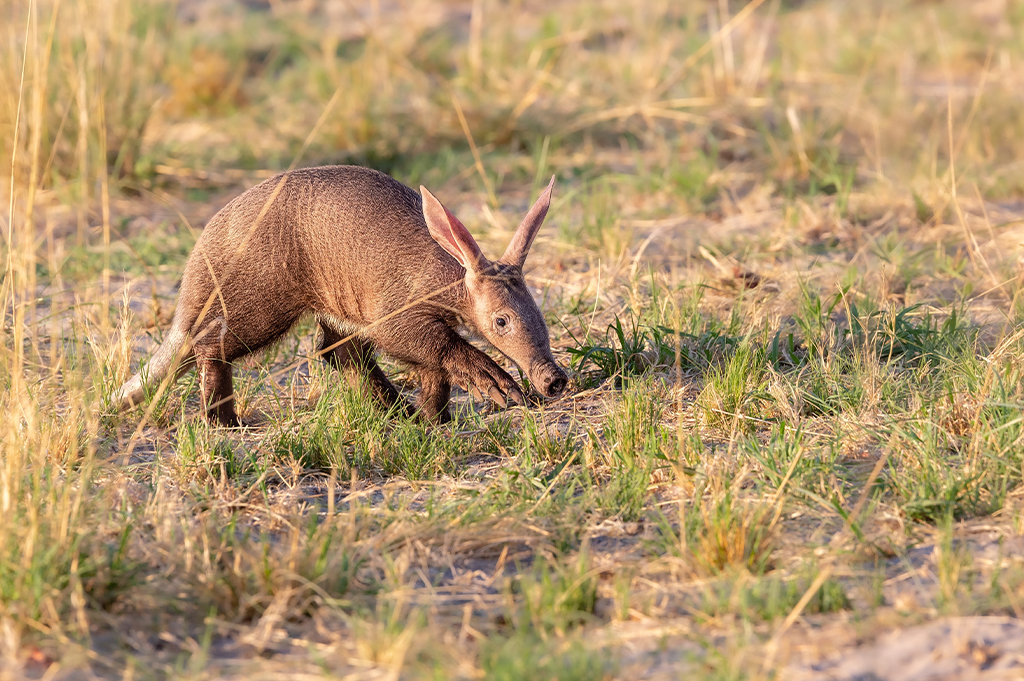
“Aardvark can be very difficult to study, as they are nocturnal burrowing animals,” explains Professor Emily Bennitt from the University of Botswana. “However, in an area like the Makgadikgadi Pans, which is very open and has a high density of aardvark, they can be observed relatively regularly.”
The project began with a survey at Thamo Telele, where camera traps were placed near suspected burrows and waterholes. Over three months, 13 aardvark sightings were recorded. Building on this success, three long-term study sites were chosen: Thamo Telele, Jack’s Camp, and a third camp in the Kalahari. Jack’s Camp guide KG Baruti is leading the Makgadikgadi research as part of his MSc.
The study aims to understand the role of aardvarks as ‘ecosystem engineers.’ Their burrows provide refuge for at least 27 vertebrate species, according to research in South Africa.
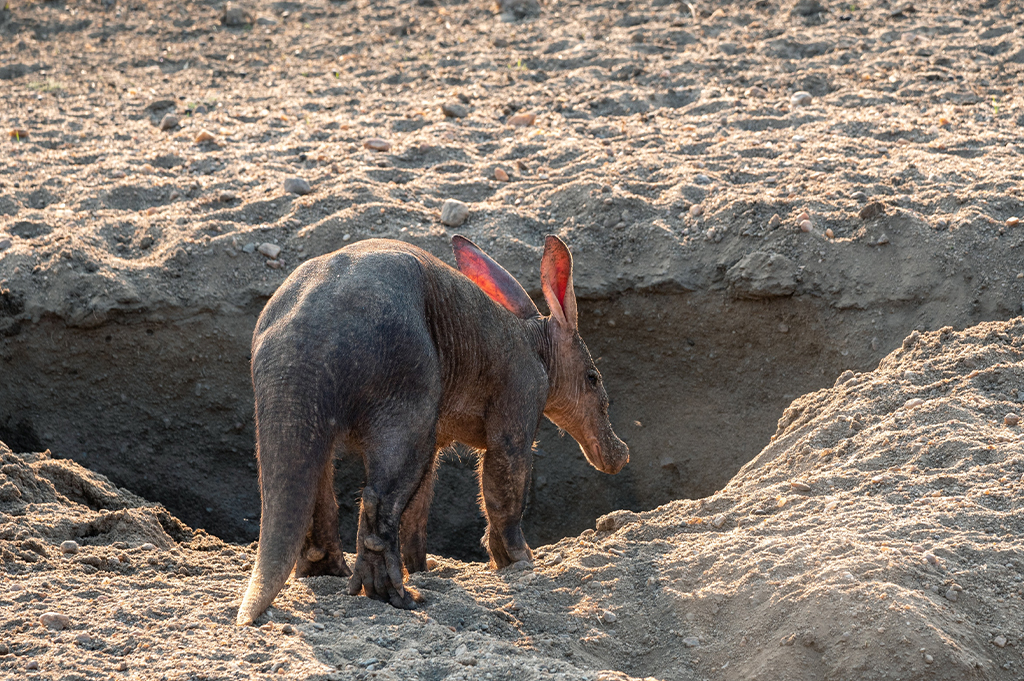
“This is the first project focusing on aardvarks in Botswana,” says Professor Bennitt. “Aardvarks are a keystone species — their burrows are vital to many other animals. Their digging also turns over soil, influencing how the entire ecosystem functions.”
But the aardvark’s survival is threatened by shifting climate conditions.
“Ants and termites are highly sensitive to extreme temperatures and drought,” Emily notes. “When termite activity drops, aardvarks struggle to find enough food. We’ve even observed them foraging in daylight to compensate. If termites decline under prolonged drought, aardvarks lose condition — and their numbers could start to fall.”
Researchers are mapping burrow density, monitoring body condition, and documenting which species use aardvark burrows. They are also sampling invertebrates and scat to quantify aardvark diet and prey availability.
“We want to know whether aardvarks in the Makgadikgadi can meet their energy requirements year-round, or if there are critical times when they become vulnerable,” says Professor Bennitt. “This will help us predict how climate change may affect their population in the future.”
By understanding the aardvark’s role and vulnerabilities, the project hopes to enable targeted conservation efforts — protecting not just aardvarks, but the many species that depend on them.
