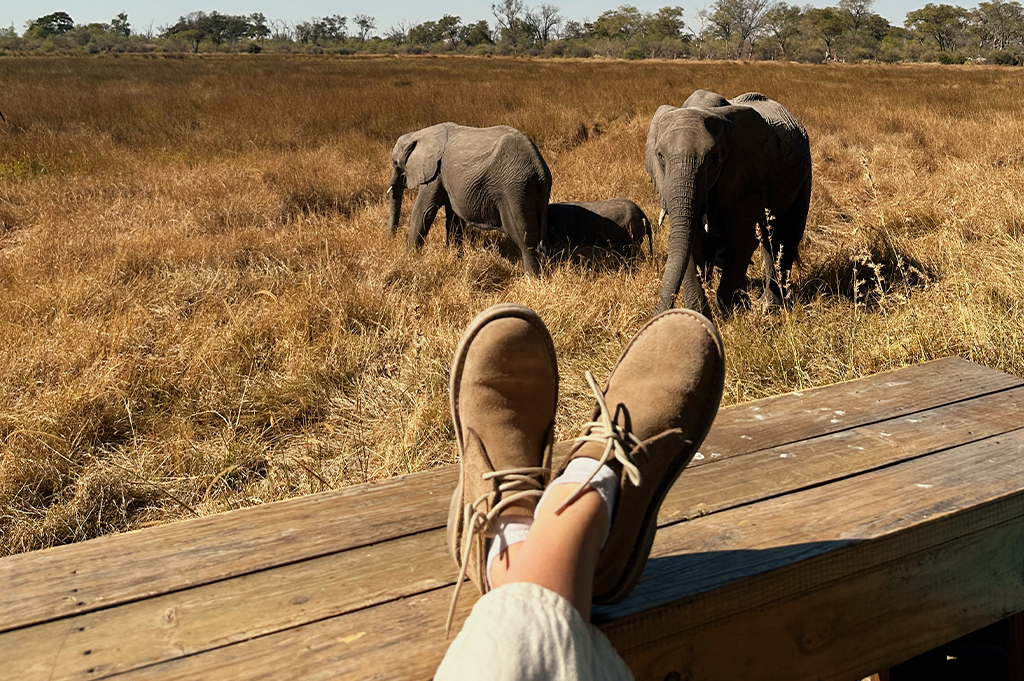
When you picture safari style, you might think of explorers in wide-brimmed hats and linen shirts, sundowners in hand, and the sky fading to gold. That image still holds true, but dressing for a modern-day safari is about something simpler: looking good, feeling comfortable, and moving lightly through the wild places you’ve come to explore.
At Natural Selection, we’ve spent decades living and working across Africa’s most remarkable landscapes, from Botswana’s Okavango Delta to Namibia’s desert plains. So when it comes to what to wear on safari, we know a thing or two about style that works.
The Safari Style Mindset
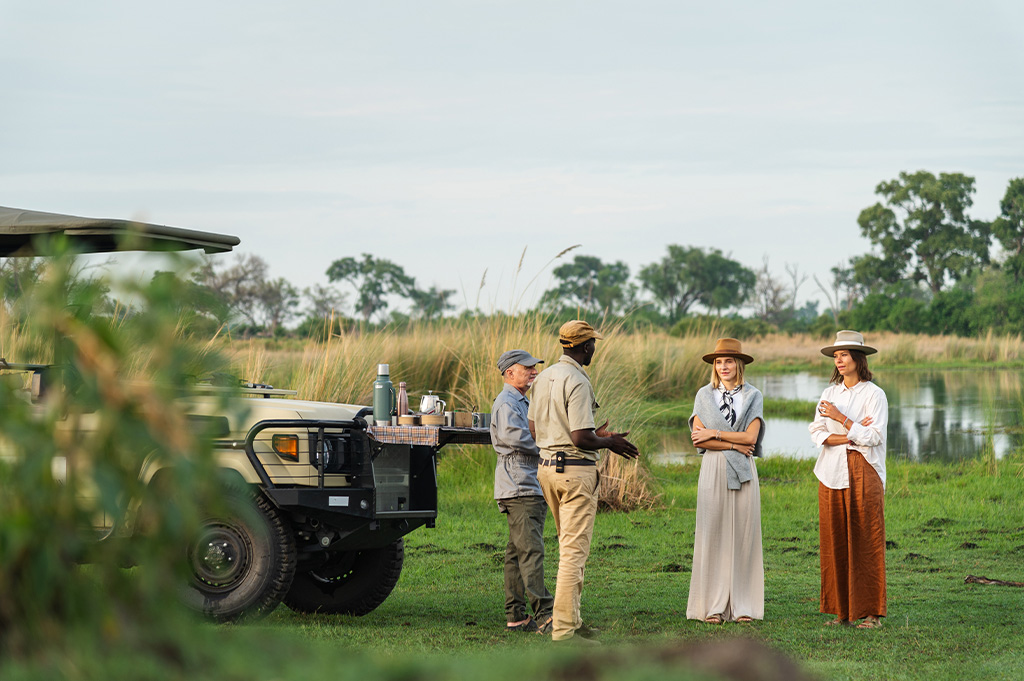
Forget fashion week; think timeless ease. On safari, the best clothes are those that move with you, breathe with you, and make you feel quietly confident, whether you’re on an early-morning drive or sipping something cold under a marula tree at dusk.
Start with durable, breathable pieces you can layer. Natural fabrics like cotton, linen, bamboo, and merino wool regulate temperature beautifully, from crisp dawn drives to mellow sundowners, and they stand up well to dust and repeat wear. Keep your palette neutral: khaki, olive, tobacco, stone, and sand blend seamlessly into the landscape and hide dust well.
There’s also a practical reason to skip vivid blues and deep blacks. In areas where tsetse flies and mosquitoes are active, these pesky creatures are more attracted to those colours once they’ve picked up human scent cues like CO₂. Lighter, earthy tones are both stylish and sensible, keeping you comfortable in and out of camp.
Dress for the Season
Southern Africa’s seasons shape how you dress.
From May to September, the air can be cool and dry. Mornings and evenings often call for long-sleeved shirts, light knits or a fleece, and even a beanie, gloves, and warm socks on the chilliest dawn drives. Layering is key: you’ll peel back to breathable shirts and trousers by midday as the sun warms the plains.
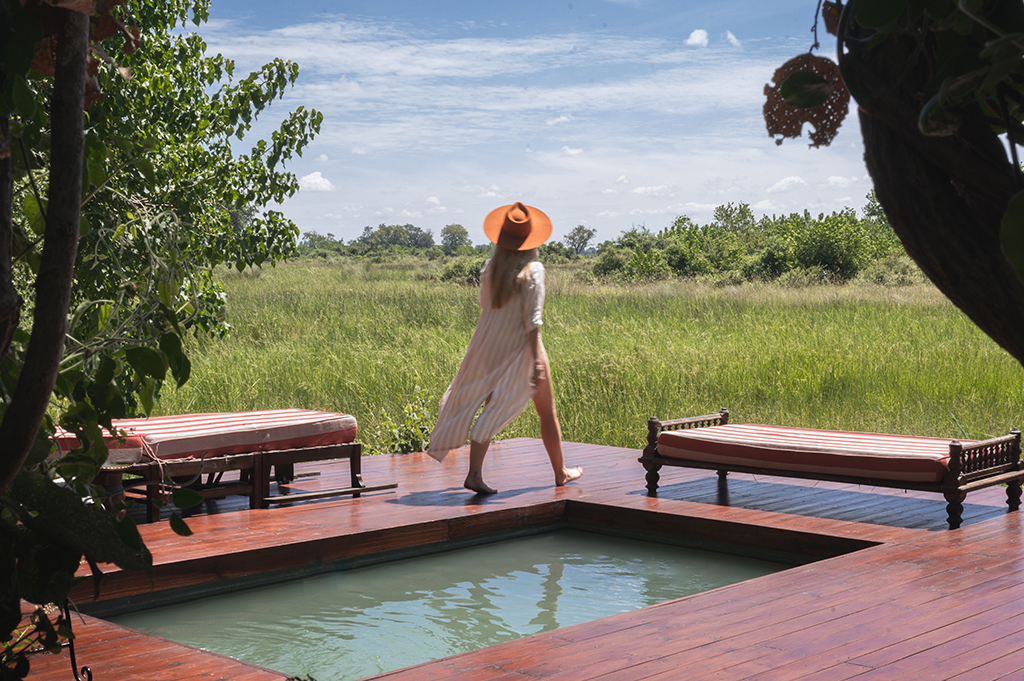
From October to March, it’s green-season time, warm, vibrant, and sometimes rainy. Think quick-dry fabrics, airy cottons and linens, and that light rain shell or windbreaker tucked neatly into your daypack. A lightweight scarf is an unsung hero: it adds warmth in winter, shade from the sun, and, when dampened, acts as a natural coolant on hot afternoons.
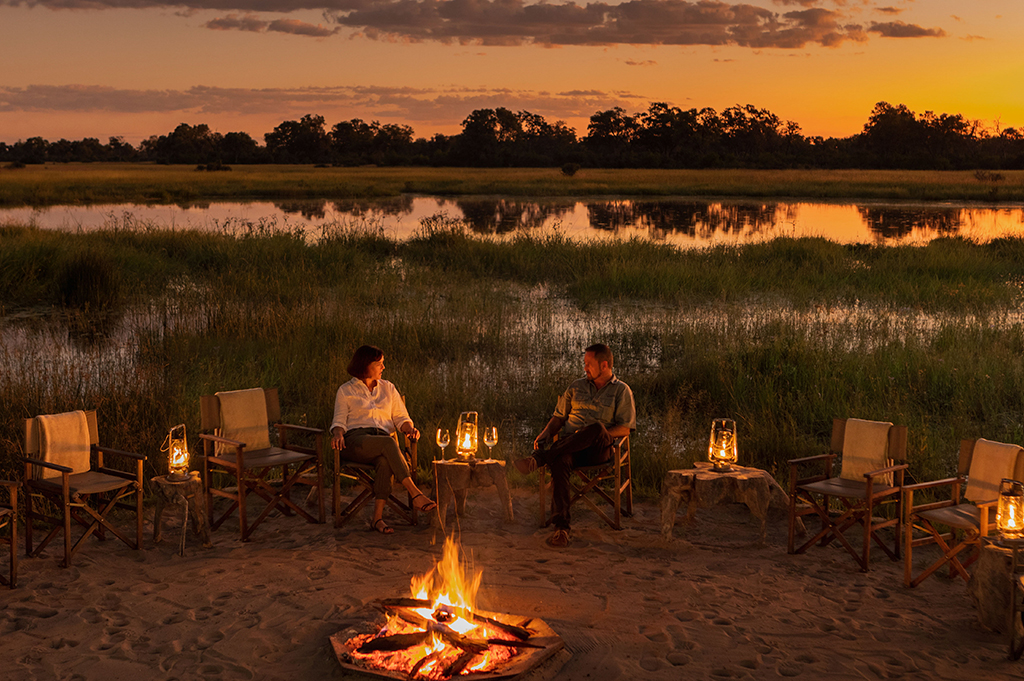
Evenings at camp are relaxed and unpretentious. There’s no dress code, just comfort with a touch of polish. Many guests change into something fresh before dinner: perhaps a clean linen shirt, a soft wrap or jumper, and long trousers to ward off insects as the stars appear.
How to Look the Part
Safari style is at its best when it feels natural. It’s about balance, refined yet relaxed, classic yet uncontrived.
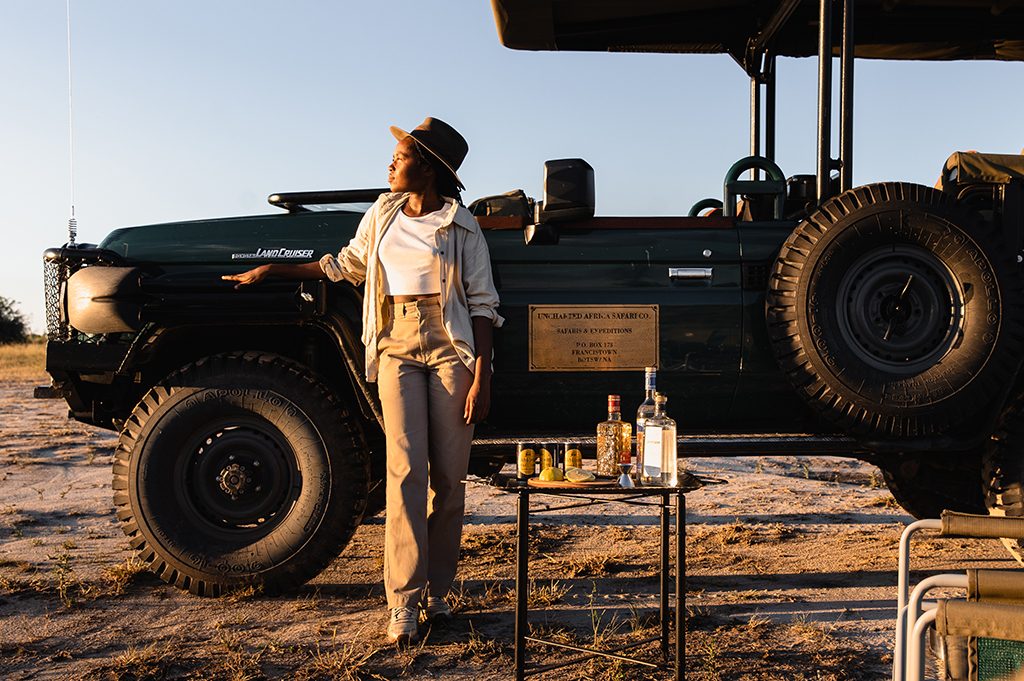
Pack pieces that can mix and match effortlessly: a shirt with rolled sleeves, a tan pair of chinos, a loose linen dress, or a cotton jumpsuit that works from breakfast to sundowners. Neutral colours and simple cuts keep things timeless, while small details such as a woven belt, a silk scarf, or a pair of well-made boots give your look personality without fuss.
Footwear can stay simple. Pack sandals or slip-ons for camp, and for vehicle-based safaris, sturdy trainers or light hikers are perfect. Save heavy boots for dedicated walking safaris. If you’ll be walking in tall grass or areas known for snakes or sticky grass, closed-toe shoes that cover the ankle plus long trousers are a smart, standard precaution.
White looks great in photographs but shows every speck of dust by midday. Opt instead for soft off-whites or ecru tones; they still feel clean without standing out too starkly in the bush.
Small Details, Big Difference
A wide-brimmed hat shields your face and finishes any outfit. Sunglasses with UV protection are a must, and a light scarf doubles up as both dust guard and accessory. Avoid strong perfumes or scented lotions; wildlife has sensitive noses, and the bush already smells perfect on its own.
Style That Lasts
Sustainability in safari dressing starts with quality and care. Natural fibres launder beautifully, breathe better, and travel well. Choose well-made pieces that you’ll re-wear for years to come, the kind that only look better with time, like a pair of durable boots that age gracefully with every adventure.
The Final Touch
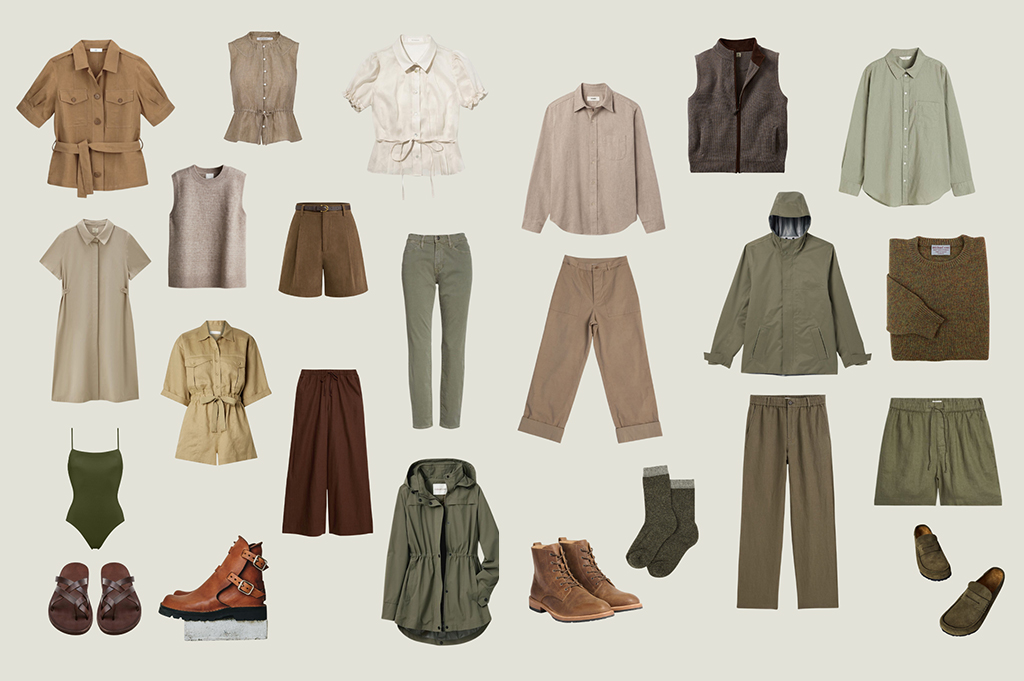
At the end of the day, safari style is about comfort, confidence, and being prepared for whatever the bush brings your way. For a simple guide to getting it right, refer to the safari packing checklist below before you zip up your bag.
Packing Smart for the Bush
Most Natural Selection camps include daily laundry service, so travelling light is not only possible, it’s encouraged. A small, well-considered capsule is all you need: two or three breathable shirts, two pairs of trousers and shorts, a mid-layer for warmth, and a light waterproof layer. Add sleepwear, swimwear, and a couple of pieces that make you feel good in the evenings.
Travelling light has its rewards: mornings are simpler and bush flights easier. When it comes to luggage, weight limits on bush planes are strict. Most regional carriers, such as Mack Air or Helicopter Horizons, allow around 20 kg (44 lb) per person, with a 5kg hand luggage limit. Soft-sided duffels pack best in small aircraft, but weight is the priority.
Top Tip
A quick word on medications: bring enough for your entire trip (plus a little extra for delays), and keep them in your carry-on in their original, labelled containers, along with copies of prescriptions, generic names included. It’s simple, it saves time at customs, and it’s especially useful if your itinerary crosses multiple borders.
Your Safari Packing Checklist
Clothing
● 2–3 breathable long-sleeved shirts (cotton, linen, or bamboo)
● 2-3 short-sleeved shirts or polos
● 2 pairs of lightweight trousers or chinos
● 1 pair of shorts (for warm afternoons in camp)
● 1 light fleece, knit, or mid-layer for cooler mornings
● 1 lightweight waterproof or windbreaker jacket
● 1 comfortable outfit for evenings around the fire
● 1 swimsuit (most Natural Selection camps have pools)
● Sleepwear and undergarments
Footwear
● Sturdy trainers or light hiking shoes (for game drives and short walks)
● Sandals or slip-ons (for camp and pool time)
● Closed-toe walking shoes or ankle boots (if joining a walking safari)
Accessories
● Wide-brimmed hat for sun protection
● Lightweight scarf (for warmth, dust, or cooling when dampened)
● Sunglasses with UV protection
● Small daypack for drives and excursions
● Belt and minimal jewellery
Toiletries & Personal Care
● SPF 30+ sunscreen and Lip balm with SPF
● Basic first-aid items (plasters, pain relief, antihistamine)
● Prescription medications in original labelled containers
● Copies of prescriptions (with generic names)
Travel Essentials
● Passport, visas, and travel insurance
● Bag (under 20 kg / 44 lb for bush flights)
● Power bank and universal travel adapter
● Camera or smartphone with spare memory cards and batteries
● Binoculars (optional but lovely to have)
Optional but Useful
● Lightweight gloves and beanie (May–September)
● Sarong or kikoi
● Notebook or journal
● iPad or kindle (loaded with books)