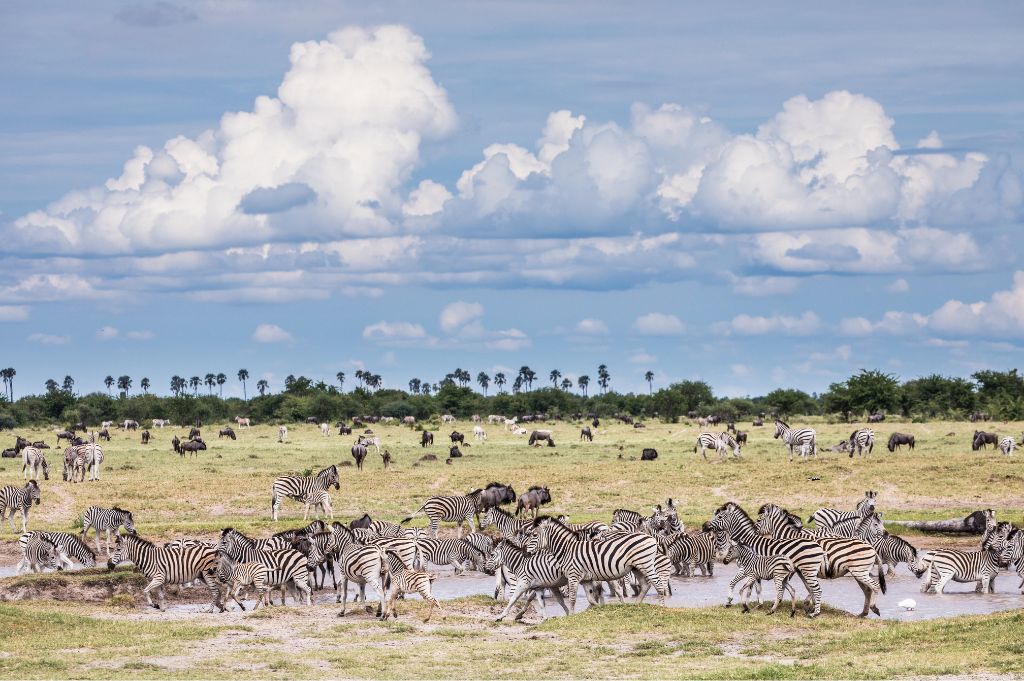
Between December and March each year something miraculous happens in Botswana’s perfectly desolate Makgadikgadi Pans – they fill with tens of thousands of zebra, so tightly packed that it’s hard to distinguish where one animal’s stripes end and another’s begins. This is Africa’s longest migration by foot, journeying through Northern Botswana, and has been so through myriad generations of zebra and wildebeest who once had free rein across these huge landscapes. Until, that is, the 1960s, when changes to land use in the area meant that fencing was erected across these historic migration routes, making it impossible for the animals to undertake their annual journey. “I haven’t found any scientific data but based on anecdotal evidence before the vet fences were erected, it was probably as big, if not bigger than the Serengeti migration, which is over a million wildebeest and 300 000 zebra” shares Dennis Sizemore of Escudilla.
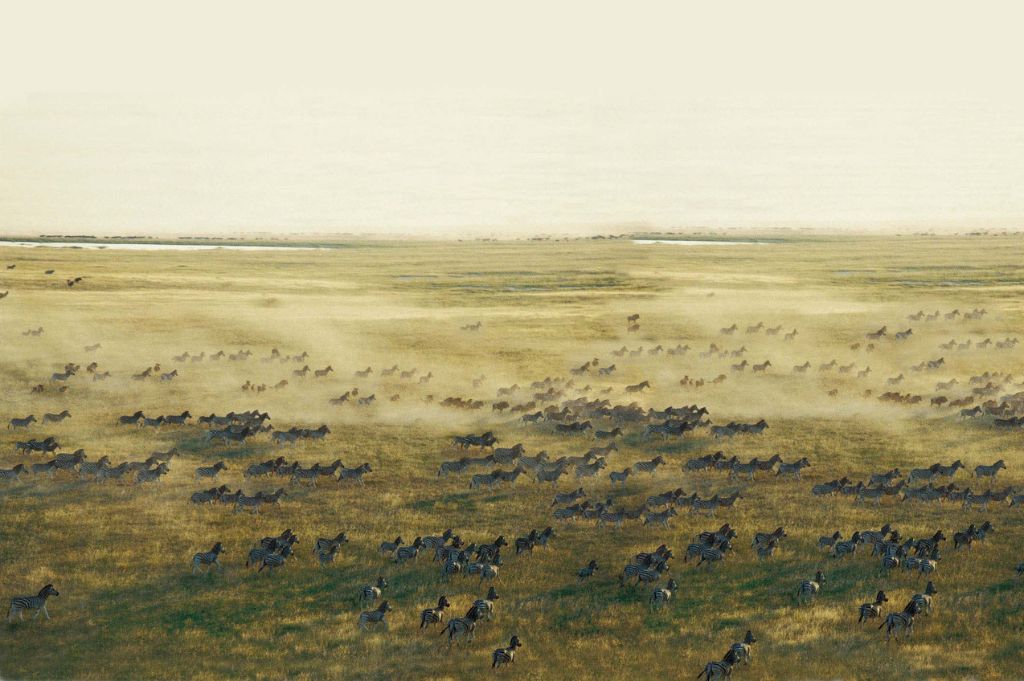
“There’s a paper from 1975 that talks of single wildebeest herd of over 100 000 in central Kalahari.” Despite this, the creatures’ instincts remained strong, and over the past 10 to 15 years, driven by ancient knowledge and necessity, they’ve once again embarked on their epic migration, pushing their way through old fences and small-hold farms. Not only has this allowed the zebras to reach the water and nutrients they had always travelled for, but it’s also expanded the range of an elephant population that had begun to burden certain areas. The grass on the edges of the Makgadikgadi Pans is more nutritious thanks to the minerals in the soil so it offers the animals richer grazing than from whence they came.
The migration being re-established is a source of fascination for conservationists, particularly since the animals who began moving had never followed this migration. “Some scientists reckoned the zebras had a genetic memory of the routes, others reckoned it was their ability to smell rain and water,” notes Dennis. “It doesn’t really matter of course, as long as they’re migrating again.” In more recent years, this migration route has been used by an increasing number of elephants, and the area is now home to resident bachelor herds as well as migrating breeding herds of elephants.
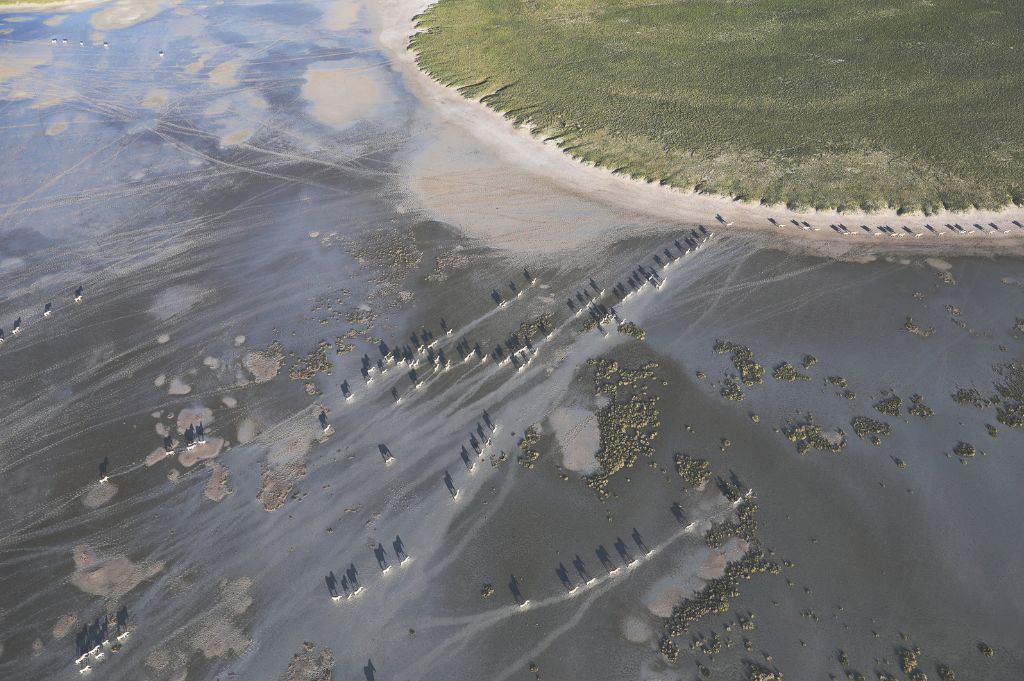
Since the inception of the Natural Selection Foundation, we’ve been committed to supporting the restoration of these migration routes, working with several organisations to determine wildlife movement and resource use, human-wildlife conflict areas and to educate villagers and farmers who had no living memory and therefore no strategies, for living or farming with wildlife. Our aim is to unrestrict this movement by working alongside local communities and stakeholders to develop land use plans that benefit all. The most significant impediments to these migration routes are roads, towns, fences, cattle posts and crucially, human attitudes towards the movement of the animals.
The program focuses on the Makgadikgadi National Park and surrounding areas, but as Dennis explains “Basically the whole of northern Botswana is one big movement area. In addition to the Chobe and Okavango migrations to the Pans, animals move from Hwange in northwest Zimbabwe to Makgadikgadi, from Namibia to the Delta, and every other which way. An important one for the future will be the movement of this migration down to Central Kalahari Game Reserve. This may be the hardest to re-establish due to the multitude of both communal and commercial farms. But for the long-term health of the region, it may be the most important.”
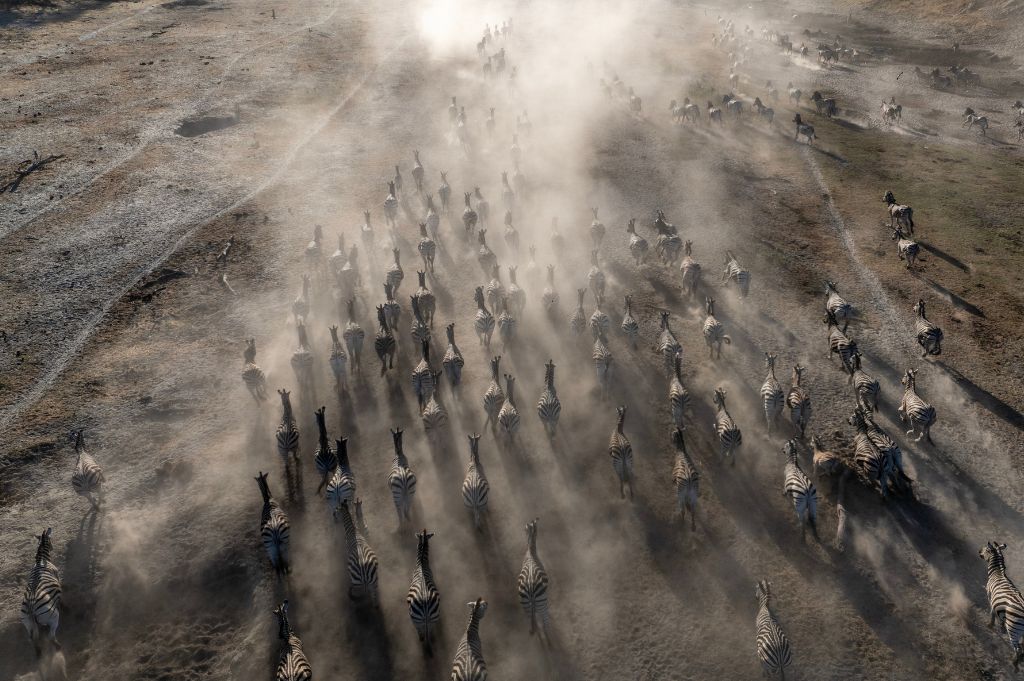
Guests can see the fruits of this conservation work from our Makgadikgadi camps. Meno a Kwena’s clifftop position overlooking the Boteti River gives travellers some of the best seats in the house when the animals arrive to drink in April and remain until roughly September time. While many visitors have prepared themselves for the extraordinary spectacle of the so many zebras flowing down the hillside to the water, as though poured from a jug, the sound often takes them by surprise. They whistle and call almost endlessly, creating a soundtrack that’s become seasonally synonymous with this relaxed camp.
Striped splendour also awaits over at the Makgadikgadi Pans, where Jack’s Camp, San Camp and Camp Kalahari all enjoy incredible sightings as the wildebeest and zebra parade across the flat landscape from around December to March. A happy byproduct of this, is that many guests are so profoundly moved by the sights they’ve seen that they choose to support this conservation work.
The work on the ground is multi-faceted, and local communities and stakeholders play crucial roles in enabling this epic migration to flourish. Donors have helped augment Natural Selection’s donations to this program by contributing to camera traps for waterhole monitoring (USD $550 buys a camera trap) or funds for lab fees where water samples are processed for our Surface Water and Herbivore Movement Research run by PhD student Delphine Dubray. Workshops with farmers can be increased with donations of as little as $200 USD and GIS data mapping can be funded with a donation of $5000 USD.
Projects like this in places like this help build a landscape of conservation success stories in which both humans and wildlife benefit, and annual species days become positive noticing rather than sage warnings. Anyone who’s seen the migration first hand will appreciate its value and it’s only when you’re on the ground that you can appreciate the sheer volume of animals touched by donations and conservation efforts. They truly mean the world.
If you feel you’d like to support the restoration of these migration routes please visit https://www.naturalselectionfoundation.org/conservation/makgadikgadi-large-mammal-mitigation-conservation-initiative/ or email info@naturalselectionfoundation.org