
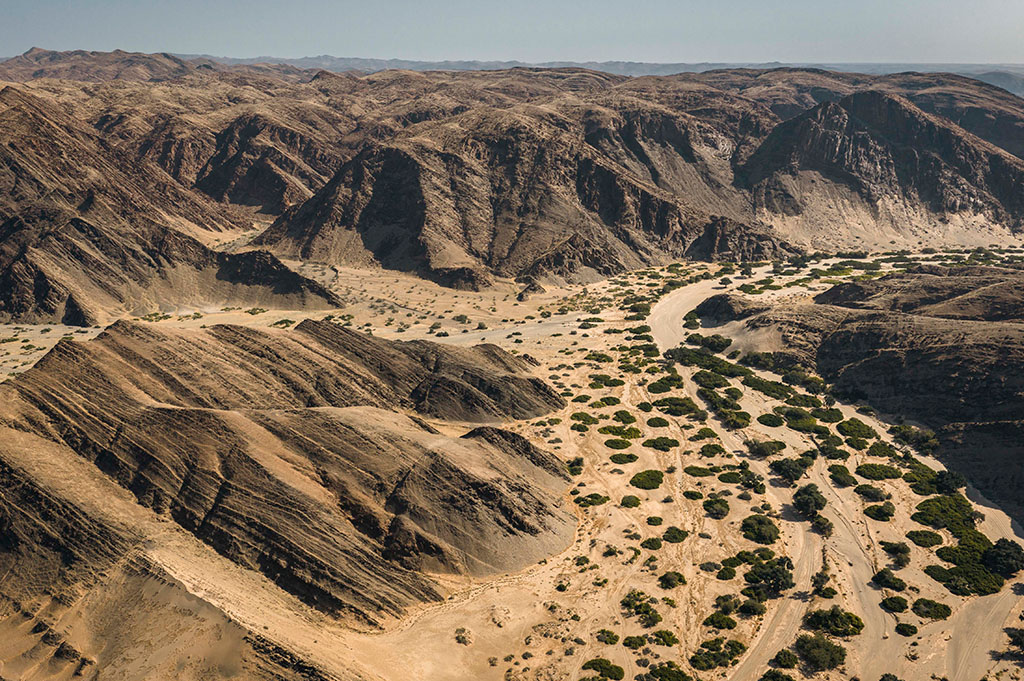
A planet as busy as ours makes wilderness hard to find, yet in Africa there are still places that feel impossibly remote – landscapes so stark and expansive they seem untouched by time and people. Hoanib River Valley in northwest Namibia is one of them. Here the land is carved by ancient rivers that lie dry and silent, flowing only when rare rains arrive to quench the land’s thirst. This is one of the driest places on earth, yet against all odds, life thrives.
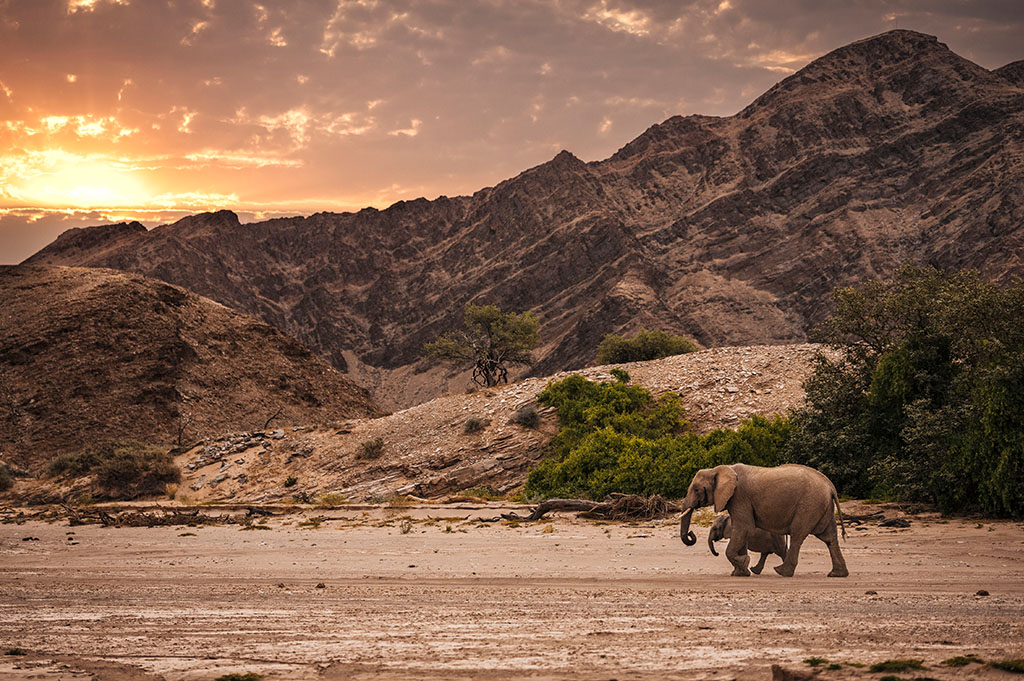
Among the most remarkable inhabitants of this landscape are the desert-adapted elephants. They survive in small, scattered populations across the across this expansive desert landscape, making them one of the earth’s most unique elephant populations. In the Hoanib River Valley, they’re counted in dozens, not hundreds, with fewer than 50 individuals threading through towering mountains and sweeping desert plains at any one time. Evolved to survive where few others could, they travel enormous distances between scattered water sources. Their feet are broader, their body mass smaller, and their ability to endure extreme desert conditions is nothing short of astonishing. Their behaviour too has adapted, and they’ve been seen sliding down dunes to reach a pool of water, and digging holes so that water will seep up for them to drink. They’ve also altered their diets to include moisture-laden food such as melons and cucumbers, enabling them to go a couple of days without water. The groups on which they live are smaller too, limiting competition for the precious desert resources.
Those keen to immerse themselves in this unique golden landscape will find an oasis in Hoanib Elephant Camp. Opening in May 2026, this new lodge will offer rare access to this wild corner of Namibia’s Kaokoland. To see desert elephants here, moving quietly through dust-coloured valleys beneath endless skies, is to witness one of Africa’s most extraordinary wildlife encounters. Here you don’t simply observe these majestic creatures – you’ll find yourself enveloped by their world.
From this new premier camp, the Hoanib Valley unfolds in front of you – dramatic landscapes shaped over millennia by tectonic forces, glaciers, wind erosion and the Hoanib River. Large ana trees, their roots reaching into hidden subterranean water, line the banks of the ephemeral Hoanib River, forming a vivid ribbon of green through the arid landscape. These trees offer both cooling shade and vital, protein-rich forage for desert-adapted elephants, giraffe, and oryx. Beyond the dry river bed and gravel floodplain, rugged mountains rise from the valley floor. To the west, the land stretches towards the Skeleton Coast, where desert and Atlantic Ocean meet in one of the continent’s most striking natural contrasts. And while desert-adapted wildlife draws many here, it is the sheer scale, stillness and presence of this landscape that defines the experience.
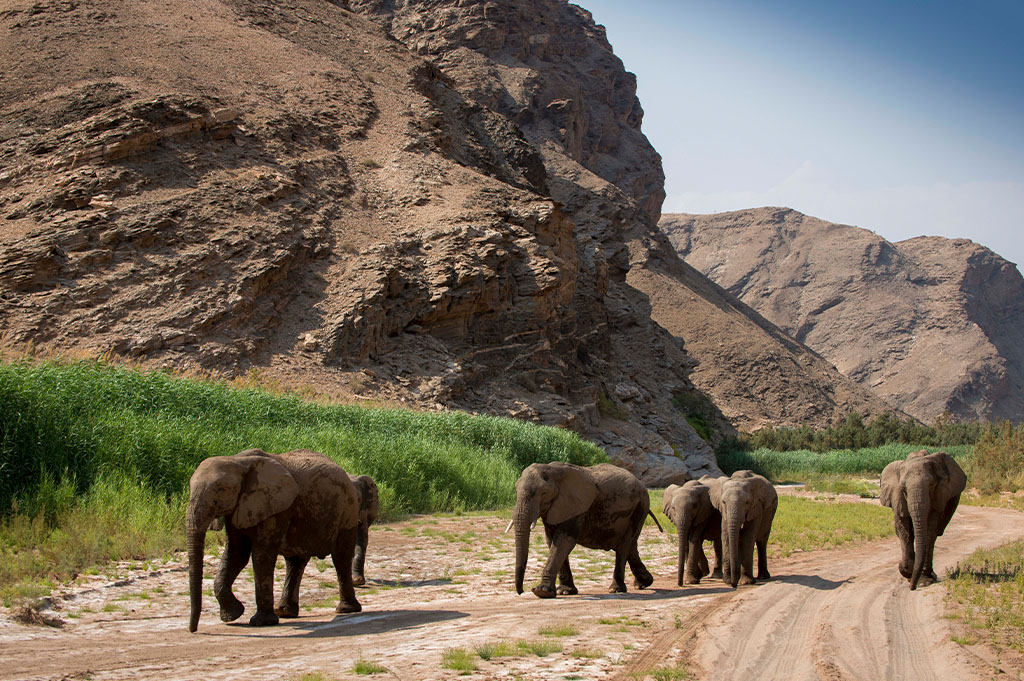
Days are spent moving through this dramatic landscape in search of the region’s iconic desert-adapted wildlife – elephant, giraffe and the elusive desert lion – or tracking free-roaming black rhino across rugged terrain with expert guides. One moment you may be following elephant tracks through a dry riverbed, the next watching giraffe browse quietly beneath the trees.
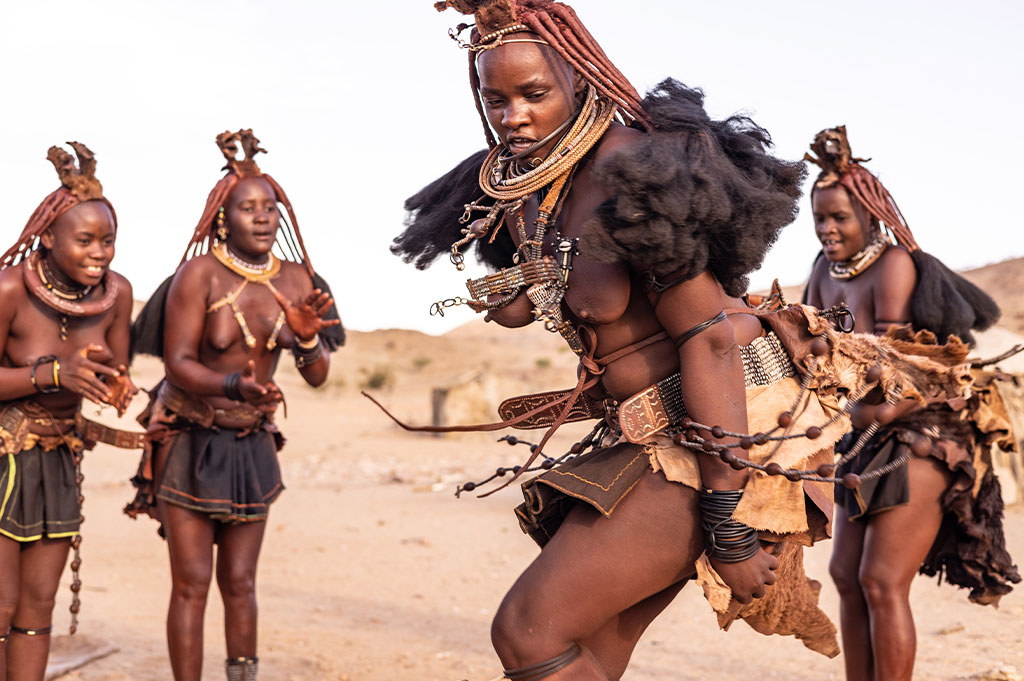
Beyond the wildlife, this is also a place of enduring human resilience. Visit the semi-nomadic Himba people who have lived in these arid landscapes for generations, maintaining traditions and knowledge deeply rooted to the land.
Hoanib Elephant Camp works in partnership with the Sesfontein Community Conservancy to support conservation efforts across the Hoanib River Valley. From monitoring the elephant movements and reducing human–wildlife conflict, to creating sustainable livelihoods for local communities – the future for both people and wildlife here is deeply connected.
Simply by staying at Hoanib Elephant Camp, guests contribute to the long-term protection of these desert giants and the fragile ecosystem they call home. 1.5% of every guest’s stay goes directly towards conservation initiatives, along with the Community, Conservation and Reserve (CCR) Fee, which supports wildlife protection, habitat conservation and local communities. This is the kind of travel that gives back to the places we visit. And it matters.
To witness these desert-adapted elephants – and to play a small part in safeguarding their future – is a rare privilege. This is a place where wild exploration, understated luxury and conservation exist effortlessly side by side.